 admin
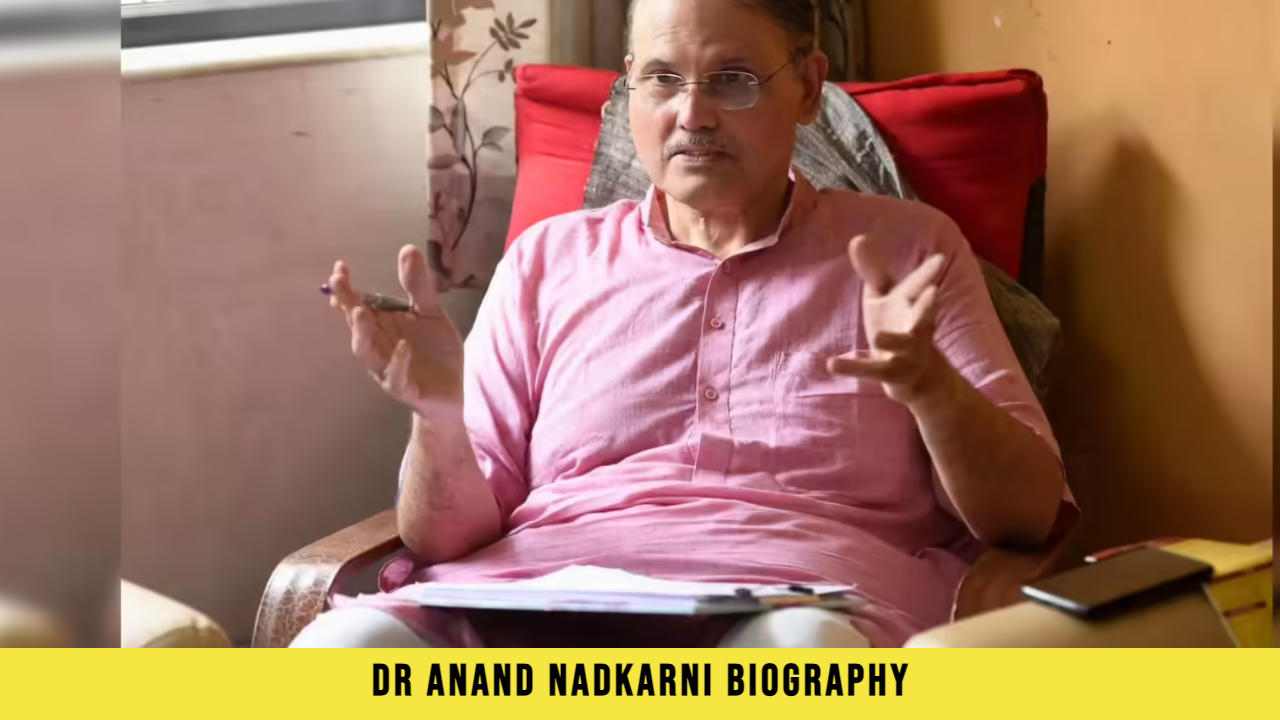
adminDr Anand Nadkarni Biography – There are doctors who treat patients. And then there are people like Dr Anand Nadkarni — a man who spent his entire life trying to make sure fewer people needed treatment in the first place. He didn’t just run a psychiatric practice. He wrote books, composed music, directed plays, mentored athletes, trained army commandos, and built one of India’s largest mental health organizations from the ground up. When he passed away on May 15, 2026, Maharashtra didn’t just lose a psychiatrist. It lost a one-of-a-kind human being.
This biography of Dr Anand Nadkarni takes you through his early life, his education, his incredible body of work, and the legacy he leaves behind.
Who Was Dr Anand Nadkarni?
A Quick Look at the Man Behind the Mission
Dr Anand Madhusudan Nadkarni was a senior psychiatrist, Marathi author, playwright, musician, social activist, and mental health advocate based in Thane, Maharashtra. He’s best known as the founder of the Institute for Psychological Health (IPH) — an organization he built with a team of mental health professionals to serve the principle of “Mental Health for All.” He was also a co-founder of Muktangan De-addiction Centre in Pune and a consultant to several National Award-winning Marathi films.
In a country where mental health was once whispered about or ignored entirely, Dr Nadkarni made it a subject for dinner-table conversation. That alone would be a remarkable achievement. He did far more.
Early Life in Jalgaon — A Childhood That Shaped a Legend
Born into a Family of Educators
Anand Madhusudan Nadkarni was born in 1958 in Jalgaon, a city in northern Maharashtra. His family had roots in education. His father Madhusudan was a lecturer in Organic Chemistry who would later retire as principal of Bandodkar College of Science in Thane. His mother Nirmala was a pioneer in her own right — she’d started the very first Montessori school in Jalgaon.
When a serious illness struck young Anand, Nirmala stopped teaching to care for him full-time. She moved him to Mumbai where better medical care was available. Madhusudan followed later. Their sacrifice would prove to be one of the most consequential decisions in Indian mental health history.
The Illness That Could Have Defined Him (But Didn’t)
When Anand was around six years old, he contracted a virus that left him unable to walk. At first, everyone assumed it was polio. But years later, when he was about nine, doctors at the Children’s Orthopaedic Hospital in Worli made a startling discovery. The virus hadn’t affected his spinal cord at all — it had attacked his brain. It was encephalitis, not polio-myelitis. Remarkably, his intelligence had remained completely intact.
He wore heavy steel calipers on his legs for years. He couldn’t join his classmates on the sports field. Instead, he learnt how to do running commentary for seven different sports — cricket being his favourite. Not a single match at school went by without Anand providing commentary. His disability didn’t slow him down. It redirected him.
After corrective surgery on both legs, he was eventually able to walk without calipers. But the experience of living with a visible physical difference gave him a kind of empathy that would define his entire career.
How His Parents Taught Him to Focus on What He Could Do
“My parents told me, focus on what you can do, rather than what you cannot,” Dr Nadkarni would later say. It sounds simple. But for a child who couldn’t run or jump like his peers, that framing was life-changing. It became the lens through which he built everything that followed.
There’s a story he used to tell from his schooldays. In sixth standard, he was chosen to play Chanakya in a school skit. Just before he walked on stage — wearing a wig, dhoti, heavy calipers, and orthopaedic shoes — a friend planted a seed of doubt. What would the audience think? Anand almost backed out. His father stepped in and told him to channel whatever anger he felt towards those who might jeer at him into his character’s fury at the king. He did. The catcalls at the start of his performance melted away. The audience sat in rapt silence as Anand played Chanakya with full conviction.
He said that moment restored his self-esteem for good.
Education and the Making of a Psychiatrist
MBBS and MD at Seth GS Medical College, KEM Hospital Mumbai
Dr Nadkarni completed both his MBBS and his MD in Psychological Medicine from Seth GS Medical College and KEM Hospital, Mumbai — one of India’s most respected medical institutions. He also earned a Diploma in Psychological Medicine (DPM). This triple qualification gave him a strong clinical foundation that he’d carry throughout his career.
Topping Mumbai University — A Major Milestone
He didn’t just pass his MD. He topped the University of Mumbai in the examination — a remarkable achievement in one of the country’s most competitive medical environments. It confirmed what his family had always believed: the illness that attacked his brain had left nothing undimmed.
Early Career as a Lecturer and Clinical Psychiatrist
After completing his qualifications, Dr Nadkarni worked as a lecturer at KEM Hospital before setting up his consulting practice in 1986. He also served as Consultant Psychiatrist at Larsen & Toubro Ltd between 1987 and 1990 — an early sign of his interest in extending psychiatric care into the corporate world.
He would go on to run a clinical practice that spanned over eleven hours a day for twenty-five years. At his peak, he was seeing an average of forty clients in a single ten-hour session. That’s not a doctor who sees patients. That’s a doctor who gives himself to them.
Founding Muktangan De-addiction Centre in 1986
Why Addiction Rehabilitation Mattered to Him
The same year he started his practice, Dr Nadkarni co-founded Muktangan De-addiction Centre in Pune alongside two others. De-addiction was deeply stigmatized in India in the mid-1980s. Substance abuse was something families hushed up, not something they sought help for. Dr Nadkarni saw the human cost of that silence every day.
What Muktangan Became Over the Years
Muktangan grew into one of Maharashtra’s leading rehabilitation facilities, eventually housing over 200 patients and more than 70 dedicated staff members. More importantly, it helped bring addiction recovery into public conversation. The word “Muktipatre” — one of Dr Nadkarni’s most popular books, about the process of recovery from addiction — found its way into Kannada translation and multiple editions, showing how far the message traveled.
The Institute for Psychological Health — Building India’s Largest Mental Health NGO
The Vision Behind “Mental Health for All”
In 1990, Dr Nadkarni helped establish the Institute for Psychological Health in Thane, Maharashtra. The founding vision was radical in its simplicity: mental health care shouldn’t be a privilege for the few. It should be accessible to everyone.
IPH brought together more than 70 mental health professionals — psychiatrists, psychologists, counselors, social workers — under a single organizational roof. What set it apart wasn’t just its size. It was the range of communities it served.
What IPH Does and How It Works
At IPH’s Thane centre, an average of 150 families sought help every single day. The organization ran outpatient services, support groups, community awareness programs, workshops for parents and teachers, and specialized sessions for young artists, athletes, and students. Dr Nadkarni coordinated a core team of 14 psychiatrists and over sixty counselors — and in his later years, deliberately stepped back from direct clinical work to allow that team to grow while he focused on macro-level community outreach.
IPH also ran a volunteer program called Manovikas, a community volunteer mental health project that put trained laypersons into their own neighborhoods to provide basic mental health support.
The VEDH Career Conference — Reaching Students Across Maharashtra
Starting in 1991, IPH began organizing VEDH — Vocational Education Direction and Harmony — an annual career perspective conference attended by students, parents, and teachers. Dr Nadkarni would conduct these conferences across eleven major cities in Maharashtra, using them as platforms to discuss not just career choices but emotional preparedness for life. He conducted over thirty public lectures a year in addition to thirty-plus corporate seminars — and still made it to each VEDH edition.
Dr Anand Nadkarni as an Author — 17 Books That Changed Minds
His Most Celebrated Books
Dr Nadkarni authored 17 books in Marathi, most of which went into multiple editions. Several were translated into English and Braille. Some of his writings were included in Maharashtra’s 9th-standard school textbooks — a rare honour that put his ideas about psychology and self-growth directly in front of a generation of young minds.
Eka Psychiatristchi Diary — The Psychiatrist’s Personal Memoir
Perhaps his most widely read work, Eka Psychiatristchi Diary (A Psychiatrist’s Diary) gave readers an inside view of a psychiatric practice. It ran to nine editions. The book managed something very rare — it made the clinical world of psychiatry feel human, warm, and relatable. It was also published in Braille, ensuring it reached visually impaired readers too.
Vishad Yog — Where REBT Meets the Bhagavad Gita
Published in October 2003, Vishad Yog explored stress management by weaving together Rational Emotive Behavior Therapy (REBT) — a structured, practical therapy approach — with insights from the Bhagavad Gita. The combination was unusual, deeply Indian, and surprisingly effective. The book won the Maharashtra State Literature Award and the Barrister Nath Pai Memorial Award in 2004–2005. It reached its 11th edition.
Other Notable Books
His body of written work also included:
- Gaddhyepanchvishi — a memoir that won the Anant Kanekar Award from Maharashtra State Government
- Arogyacha Arth — on holistic health, now in its 7th edition
- Swabhav Vibhav — on Rational Emotive thinking, now in its 17th edition, also available as an audiobook
- Jidnyasa — a training manual for an adolescent sensitization program
- Devraichya Savaleet — a unique blend of film appreciation and information about schizophrenia
Books in English, Braille, and Maharashtra School Textbooks
The reach of Dr Nadkarni’s writing wasn’t limited to Marathi-speaking adults. His books were made accessible in English translation, adapted into Braille editions, recorded as audiobooks, and formally embedded in the Maharashtra state curriculum. That kind of reach — from a person’s personal bookshelf to a school classroom to a visually impaired reader in Kannada — is the sign of writing that truly travels.
Playwright, Musician, and Cultural Force
Award-Winning Plays and Theatre Work
Dr Nadkarni wrote several one-act plays and three full-length scripts for professional Marathi theatre. He wasn’t just writing about mental health for medical audiences. He was putting it on stage where it could reach thousands.
One of his early plays, Amhi Jagato Bepham, starring Rohini Hattangadi, won him the B.C. Mardhekar Memorial Award as a promising young dramatist at the Satara Akhil Bharatiya Marathi Sahitya Sammelan. Another play, Rang Maza Vegala, earned actress Bhakti Barve the Natya Darpan Award. His play Get Well Soon — based on his book Muktipatre and starring Swapnil Joshi — won over 15 awards for best commercial play in 2014.
Tya Tighanchi Goshta — The Play That Won in Sydney
His play Tya Tighanchi Goshta won the MIFTA 2016 award in Sydney for Best Playwright. It also won the prestigious Master Dinanath Memorial Award. The fact that a Marathi play about psychological themes was being recognized on an international stage in Sydney speaks to how universal his work had become.
His Music Albums and Tabla Playing
Dr Nadkarni was also a musician. He played the tabla, wrote songs in both Marathi and Hindi, and published three full music albums. He was part of a medical orchestra that performed professional programs for over twenty-five years. That’s not a hobby. That’s a sustained artistic commitment running parallel to a full-time psychiatric career.
Maharashtra Deputy Chief Minister Eknath Shinde, in his tribute, described him as simultaneously an exceptional psychiatrist, litterateur, poet, playwright, actor, musician, tabla player, painter, social worker, and philosopher. It’s a description that seems almost implausible — until you look at the evidence.
Consulting for Marathi Cinema
Devrai — The National Award-Winning Schizophrenia Film
Dr Nadkarni served as psychiatric consultant for Devrai (2004), the first-ever Marathi feature film made on the subject of schizophrenia. Directed by the iconic duo Sumitra Bhave and Sunil Sukhtankar, and starring Atul Kulkarni, Sonali Kulkarni, and Dr Mohan Agashe, Devrai won the National Film Award in 2004–2005. Dr Nadkarni’s involvement ensured the portrayal of schizophrenia was clinically accurate while remaining emotionally accessible.
Kadachit and Kasav — Telling Stories of Emotional Recovery
He also consulted on Kadachit, produced by actress Ashwini Bhave, which went on to win four Maharashtra State Awards. His final film consulting work was on Kasav (2017), directed again by Sumitra Bhave and Sunil Sukhtankar, which explored recovery from depression and won the Suvarna Kamal (National Award) for Best Film in April 2017. Three films, three different mental health conditions — and each one built with Dr Nadkarni’s clinical guidance making the storytelling truthful.
Corporate Mentor, Policy Advisor, and Public Speaker
Training Everyone From Army Commandos to CEOs
Dr Nadkarni’s workshops reached places you wouldn’t expect a psychiatrist to go. He conducted training sessions for commando forces, postgraduate medical students, corporate executives, athletes, performers, and school teachers. His corporate mentoring work extended to mid-sized entrepreneurs across various industries, and he served as an independent director on the boards of several listed companies.
He was a fluent speaker in Marathi, English, and Hindi — comfortable delivering a nine-hour discourse on stress management and Indian philosophy across three evenings (which he did in December 2005) or taking on a live television appearance at short notice.
His Work with the National Planning Commission
Dr Nadkarni served as an advisor to India’s National Planning Commission — recognition that his expertise went beyond clinical psychiatry into the realm of national-level public health policy. He understood mental health not just as a medical issue but as a social and developmental one.
Personal Life — Marriage, Family, and Living with Disability
His Wife Savita Apte and Their Story
Dr Nadkarni married Savita Apte in 1998. She had joined IPH in 1993 — years before their marriage — and went on to complete her MSc and PhD after the wedding. Their partnership was both personal and professional, with Savita becoming an integral part of the IPH family.
Son Kabeer and Daughter Sukhada
Their son Kabeer, a wildlife researcher and guitarist, described his father as someone who “never let his limitations stop him from doing what he does.” He recalled a family trip to Sri Lanka where Dr Nadkarni — despite his disability-related leg issues — insisted on climbing to the top of Sigiriya Rock in 40-degree heat, holding his wife’s hand and taking ten-minute breaks when needed.
Dr Nadkarni’s daughter Sukhada followed her father into psychiatry. She’s a practicing psychiatrist, lives in Indore, and has a son of her own. The family’s connection to mental health runs across two generations.
How He Managed His Physical Disability With Grace
After age 35, Dr Nadkarni experienced what he called a “re-emergence” of his disability — non-healing ulcers and infected veins that complicated his daily life. Wherever he traveled, he carried a foldable stool because his legs couldn’t be left hanging for long. His travel kit included pressure bandages and two items he’d worked out himself: he’d dry his feet with a hair dryer after bathing and apply paraffin jelly to keep the skin from cracking.
He never framed any of this as suffering. He framed it as logistics.
Philosophy and Guiding Principles
“Focus on What You Can Do, Not What You Can’t”
On Asking for Help — Interdependence vs Dependence
On Asking for Help — Interdependence vs Dependence
One of Dr Nadkarni’s most insightful observations was about the act of asking for help. He drew a careful distinction: “If I ask for help because I feel inferior, that is pleading. But if I ask for help to complete a specific task, and I can be of help to that person in return, that is interdependence.” In a culture where asking for help — especially about mental health — is often seen as weakness, this reframing was powerful and quietly radical.
His advice to people: “Don’t get so carried away with your goals that you drift away from your purpose.” And his purpose? He believed it should be the same for everyone: “To develop yourself daily to become a better human being.”
Death and Legacy — May 15, 2026
Cause of Death and Final Days
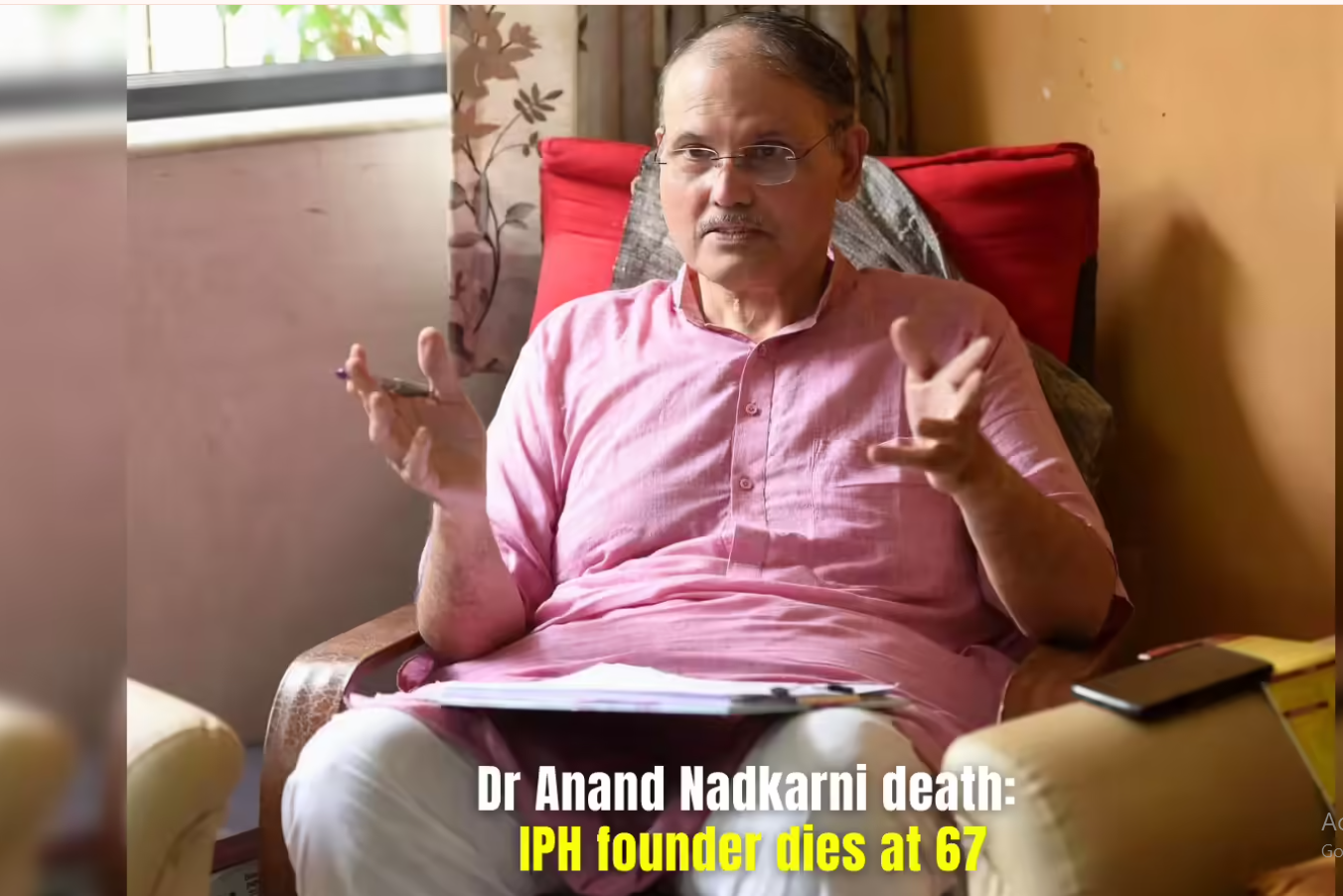
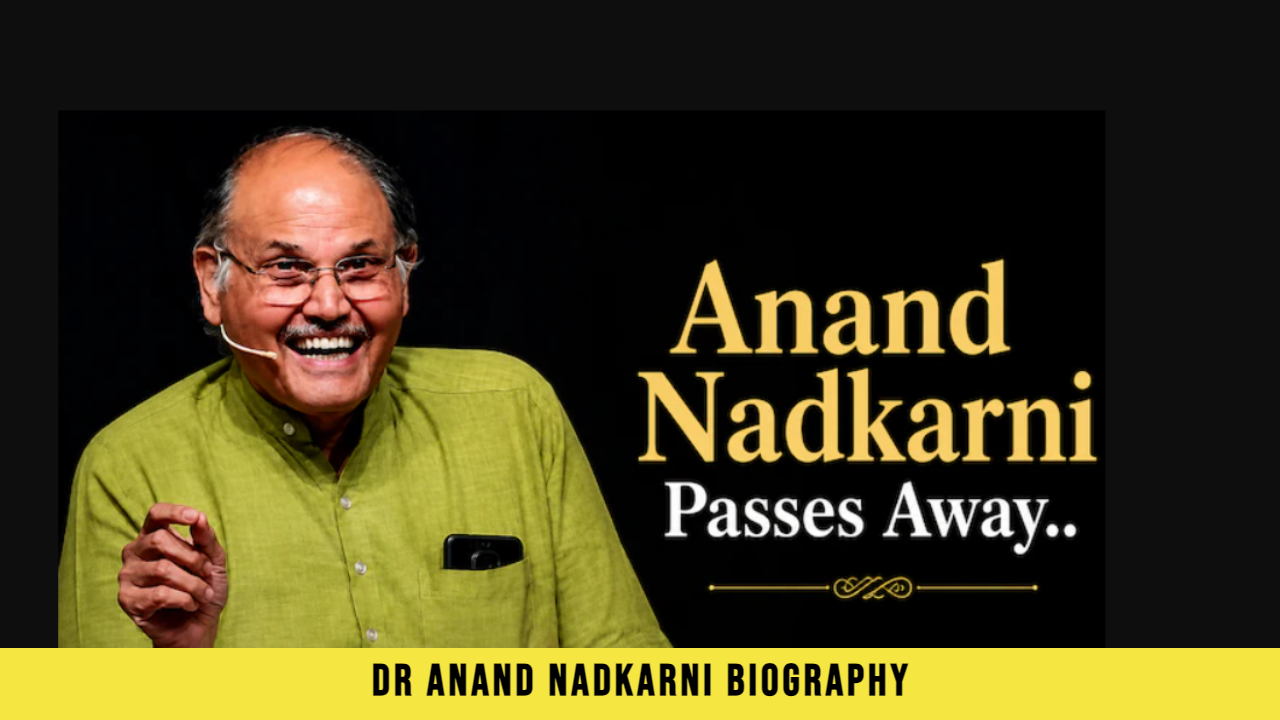
Dr Anand Nadkarni passed away in the early hours of Friday, May 15, 2026, at his residence in Thane, Maharashtra. Reports indicate he died between 4:30 am and 5 am. He had been suffering from a prolonged illness and had been admitted to a Mumbai hospital in the period before his death. He was 67 or 68 years old, depending on the source — born in 1958.
As recently as March 2026, just weeks before his death, he had been present at AIIMS Nagpur for a faculty mentoring workshop. He was still teaching, still sharing, still showing up.
How Maharashtra Mourned His Passing
Maharashtra Deputy Chief Minister Eknath Shinde said the news was “extremely shocking.” He called Dr Nadkarni “the beloved son of Thane” — a man of “boundless energy and a cheerful personality.” Colleagues described him as a doctor who successfully blended psychiatry with literature, philosophy, and social activism in a way no one else had managed. The IPH, the institution he built, announced his passing with quiet grief.
He is survived by his wife Savita and his son Kabeer.
What His Legacy Means for Indian Mental Health
Dr Nadkarni spent four decades making mental health visible. He wrote about it, performed it on stage, helped portray it on film, taught it in schools, and argued for it in government corridors. He believed — and proved — that mental health awareness doesn’t belong only in hospitals. It belongs in classrooms, in theatres, in corporate boardrooms, and in every Marathi-speaking home where someone is struggling in silence.
His books remain. IPH continues. Muktangan continues. And the hundreds of mental health professionals he trained, mentored, and inspired are carrying his work forward.
Some doctors treat illness. Dr Anand Nadkarni tried to change the culture that creates it. That’s a legacy that doesn’t end with a death notice.
Frequently Asked Questions About Dr Anand Nadkarni
What is Dr Anand Nadkarni best known for?
Dr Anand Nadkarni is best known as the founder of the Institute for Psychological Health (IPH) in Thane, Maharashtra, and as one of India’s leading advocates for accessible mental health care. He was also a celebrated Marathi author, playwright, and musician.
What books did Dr Anand Nadkarni write?
He authored 17 books in Marathi, including Eka Psychiatristchi Diary (A Psychiatrist’s Diary), Vishad Yog (a book on stress management that won the Maharashtra State Literature Award), Swabhav Vibhav, Gaddhyepanchvishi, Arogyacha Arth, and Muktipatre. Several were translated into English, Braille, and other Indian languages.
What is the Institute for Psychological Health (IPH)?
IPH is a voluntary-sector mental health organization founded in Thane in 1990 by Dr Nadkarni and colleagues. Operating under the motto “Mental Health for All,” it brings together mental health professionals — including psychiatrists, psychologists, and counselors — to offer counseling, community outreach, rehabilitation, and education programs.
What films did Dr Anand Nadkarni consult on?
He served as psychiatric consultant for three acclaimed Marathi films: Devrai (2004), which won the National Film Award and explored schizophrenia; Kadachit, which won four Maharashtra State Awards; and Kasav (2017), which won the Suvarna Kamal National Award for its portrayal of recovery from depression.
What is Muktangan De-addiction Centre?
Muktangan is a rehabilitation and de-addiction centre in Pune, co-founded by Dr Nadkarni in 1986. It became one of Maharashtra’s major facilities for treating substance abuse, with over 200 patients and 70+ staff. Dr Nadkarni was its founding trustee.
How did Dr Anand Nadkarni die?
Dr Nadkarni passed away on May 15, 2026, at his residence in Thane following a prolonged illness. He was 67 (some sources say 68) at the time of his passing.
What awards did Dr Anand Nadkarni win?
His awards included the Maharashtra State Literature Award and Barrister Nath Pai Memorial Award (for Vishad Yog), the Anant Kanekar Award (for Gaddhyepanchvishi), the B.C. Mardhekar Memorial Award in drama, the MIFTA 2016 Best Playwright Award in Sydney (for Tya Tighanchi Goshta), and the Master Dinanath Memorial Award.
What was VEDH, the conference organized by IPH?
VEDH stands for Vocational Education Direction and Harmony. It’s an annual career perspective conference started by IPH in 1991, designed to help students, parents, and teachers navigate career decisions with emotional intelligence. Dr Nadkarni personally conducted these conferences across eleven major cities in Maharashtra.


 admin
admin
 BioPadi Editor