 admin
adminMost directors spend their twenties chasing their first feature film. Anik Dutta spent twenty years making commercials — and when he finally stepped into mainstream Bengali cinema, he delivered one of the biggest hits Tollywood had seen in years. That’s the Anik Dutta story. It’s not a tale of overnight success or easy breaks. It’s a story of patience, craft, and a deep love for the world he grew up in.
If you’ve been looking for the complete Anik Dutta biography — his family, his education, his 20-year advertising career, every film he’s made, and what drives him as a storyteller — you’re in exactly the right place.
Who Is Anik Dutta?
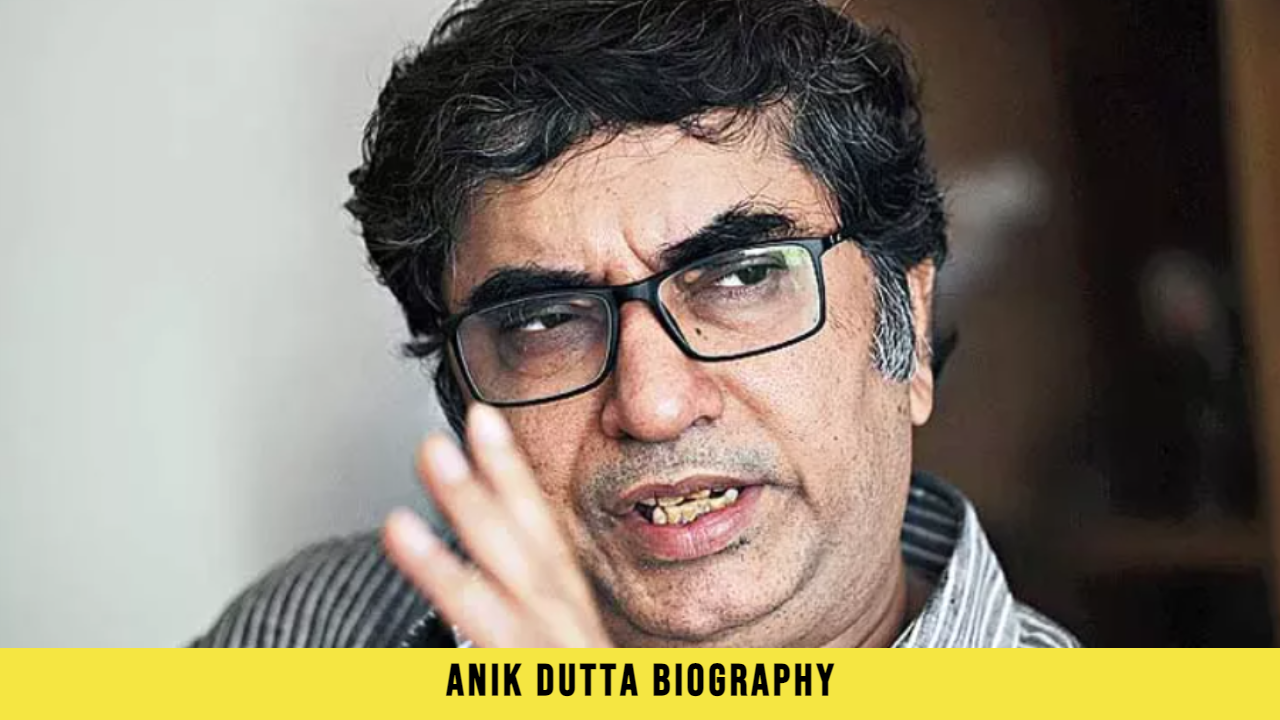
Anik Dutta (Bengali: অনীক দত্ত) is one of the most respected film directors in contemporary Bengali cinema. He’s known for blending wit, nostalgia, and sharp social commentary into films that feel both deeply personal and broadly entertaining. Born on May 22 in Kolkata, West Bengal, he wears multiple hats — director, screenwriter, lyricist, and dialogue writer.
But what truly sets him apart from his peers isn’t just his talent. It’s the road he took to get here.
Quick Facts at a Glance
- Full Name: Anik Dutta
- Date of Birth: May 22
- Birthplace: Kolkata, West Bengal, India
- Profession: Film Director, Screenwriter, Lyricist
- Debut Film: Bhooter Bhabishyat (2012)
- Notable Works: Bhooter Bhabishyat, Aparajito, Borunbabur Bondhu, Joto Kando Kolkatatei
- Family Connection: Grandson of Narendra Chandra Dutta (founder of United Bank of India); granduncle is legendary filmmaker Bimal Roy
- Production Companies: Bioscope, Filmshop
The Family That Shaped Him
Anik Dutta didn’t grow up in an ordinary household. His grandfather, Narendra Chandra Dutta, was a titan of Indian banking — the founder of the United Bank of India. That’s a significant legacy to carry. But on the creative side, the weight is just as heavy. His granduncle is none other than Bimal Roy, the legendary Hindi film director behind classics like Do Bigha Zamin and Devdas.
It’s hard to say exactly how much that lineage influenced him consciously, but when you look at Anik’s films — their emphasis on story over spectacle, their social sensitivity, their dignity — the family thread is visible.
Early Life and Education in Kolkata
Growing Up in a Distinguished Household
Kolkata formed Anik Dutta the way it forms most who grow up there — with cinema in the air, literature on the shelves, and politics around every corner. The city’s intellectual tradition, its theater culture, its adda (the Bengali art of long, passionate conversations) all left their mark on him.
He isn’t the type to talk at length about his childhood publicly. What’s clear is that he grew up surrounded by the kind of cultural richness that would eventually pour itself into every film he made.
His Academic Path and Marketing Diploma
After completing his graduation, Anik pursued a Post-Graduate Diploma in Integrated Marketing Communication from St. Xavier’s College, Kolkata. That’s a communication and advertising background — which, in hindsight, explains a lot. It sharpened his understanding of audiences, of persuasion, of how images and language work together to create meaning.
This wasn’t a film school education. It was something arguably more practical — a training ground for understanding how people respond to stories.
Two Decades Behind the Camera Before Tollywood
Here’s the part of Anik Dutta’s biography that most people don’t talk about enough. Before he ever directed a Bengali feature film, he spent roughly twenty years as an independent filmmaker in the advertising and corporate world.
Building Bioscope and Filmshop
Anik set up two production companies — Bioscope and Filmshop. Both focused primarily on commercial filmmaking: ad films, corporate productions, documentaries, and promotional content. These weren’t passion projects. They were businesses. And he ran them well.
400 Commercials and Corporate Films
The numbers are staggering. His companies produced close to 400 television commercials for some of India’s biggest corporate names — Tata Steel, ITC, SmithKline Beecham, Khaitan, Shalimar, SAIL, and Glaxo SmithKline, among others. That’s not a portfolio; that’s an entire career’s worth of work, executed at a professional level before he even thought about feature films.
This period gave him something film school rarely can — a deep technical fluency with cameras, lights, pacing, and storytelling within tight time constraints. Every 30-second commercial teaches you to cut the fat.
The Srijon Samman Win in 2004
His commercial work didn’t go unnoticed. In 2004, he won the Srijon Samman in the Best Original Commercial category — a recognition that came roughly eight years before his first feature film. It’s a small detail, but it tells you everything about how seriously he took the craft during those “pre-Bollywood” years.
Bhooter Bhabishyat — The Debut That Changed Bengali Cinema (2012)
When Anik Dutta finally stepped into mainstream Bengali filmmaking, he did it with a film that nobody quite expected.
What the Film Is Actually About
Bhooter Bhabishyat (translated as The Future of the Ghosts) is a 2012 Bengali fantasy-comedy horror film. The story follows an aspiring director named Ayan Sengupta, who visits a grand, crumbling mansion for an ad shoot and ends up hearing the tales of the ghosts who live there.
These aren’t your typical scare-you-out-of-your-seat ghosts. They’re funny, melancholic, very Bengali spirits from different historical eras — an army officer, a zamindar, a cabaret dancer — who are terrified of being evicted from their only home when real estate developers want to demolish it and build a shopping mall. It’s a ghost comedy. It’s also a sharp satire about heritage, development, political muscle, and what happens when a city forgets its own history.
Why It Became a Cultural Phenomenon
The film was made on a budget of roughly ₹0.6 crore — extraordinarily lean for a production of its scope. It ended up earning around ₹3 crore in its first 100 days, making it one of the biggest hits Bengali cinema had seen in that era. It ran for three weeks in four multiplexes in Mumbai — remarkable for a Bengali film. It was also the only Bengali entry at the River to River 2012 Florence Indian Film Festival and received an invitation for screening at Cannes.
What made it a phenomenon wasn’t just the box office. It was the way it spoke to a generation of Bengali viewers who felt their culture, their heritage buildings, their old ways of life being steadily demolished in the name of progress. The film said what many people felt but couldn’t quite articulate.
When director Kaushik Ganguly called Anik after the film released and said, “This is probably how history is made,” Anik’s own reaction was one of near-disbelief. “I was scared,” he’s admitted. He went in thinking about story and craft. He came out with a cultural touchstone.
Awards and Festival Recognition
The film swept the Anandalok Awards for Best Director and earned Anik the Zee Bangla Gourav Samman for both Best Directorial Debut and Best Screenplay & Dialogue. It was a clean sweep for a debut director — and an unusual one. Dialogue-writing awards are rarely given to the same person who wins direction. It underlined that Anik wasn’t just a visual director; he was a complete author of his films.
Aschorjo Prodip and Gang of Ghosts (2013–2014)
Adapting Shirshendu Mukhopadhyay’s Novel
In 2013, Anik directed Aschorjo Prodip, an adaptation of Nobel laureate-beloved Bengali author Shirshendu Mukhopadhyay’s novel of the same name. Though he took the director’s chair, this was one of the instances where he didn’t take writing credit — a notable distinction in his otherwise author-driven career. The film carried the whimsy and literary sensitivity that you’d expect from someone navigating Mukhopadhyay’s world.
The Bollywood Remake That Didn’t Quite Land
In 2014, a Hindi remake of Bhooter Bhabishyat was produced under the title Gang of Ghosts. Anik wrote the screenplay but didn’t direct it. The film received mixed responses and was considered a box office disappointment — a reminder that what works in the specific cultural soil of Bengal doesn’t always transplant cleanly to Bollywood. Anik himself has said he received about 40 offers for Bombay remakes after his debut, and was glad he didn’t take most of them.
Meghnad Badh Rahasya (2017) — The Literary Adaptation
After a gap from full-length directorial work, Anik returned with Meghnad Badh Rahasya in 2017. The film is based on Michael Madhusudan Dutta’s epic poem — a cornerstone of Bengali literature — and explores its themes through a contemporary lens. It reflected Anik’s consistent pull toward Bengali cultural history, literature, and the kind of stories that the mainstream had largely moved past. Once again, he served as both director and writer.
Bhobishyoter Bhoot (2019) — Satire Meets Controversy
By 2019, Anik was back with Bhobishyoter Bhoot (Future Ghosts), another supernatural satirical comedy that shared its thematic DNA with Bhooter Bhabishyat — though Anik was emphatic that it wasn’t a sequel. Despite similar subject matter, the political commentary in this film was sharper and more pointed.
The film faced a particularly striking fate. Shortly after its release on February 15, 2019, it was reportedly pulled from screens in West Bengal under circumstances widely attributed to political pressure. The incident caused a significant stir in the Bengali film community and drew national media attention. Critics saw it as yet another example of Bengal’s political environment clashing with artistic expression — ironically proving the film’s own satirical point.
Borunbabur Bondhu (2020) — A Quiet, Emotional Masterpiece
If Bhooter Bhabishyat announced Anik Dutta with a shout, Borunbabur Bondhu (Borunbabu’s Friend, 2020) was him speaking softly — and being heard just as clearly.
The film tells the story of an aging gentleman and his relationship with an unusual friend. It’s gentler, more intimate, and more emotionally restrained than his earlier work. It didn’t rely on big laughs or political provocations. It simply told a human story with grace.
Critics loved it. Awards juries did too. The film earned Anik the West Bengal Film Journalists’ Association Award for Best Director, the Filmfare Awards East for Best Director, and the Filmfare Awards East for Best Dialogue — a triple recognition that cemented his reputation as one of Bengali cinema’s most complete filmmakers. The film’s success proved his range. He wasn’t just a satirist. He was a storyteller in the fullest sense.
Aparajito (2022) — His Most Celebrated Work
If there’s one film that truly put Anik Dutta on the global cinema map, it’s Aparajito.
The Story Behind the Film
Released on May 13, 2022, Aparajito (also known as Aparajito: The Undefeated) is a biographical drama about the making of Satyajit Ray’s iconic debut film Pather Panchali. Set in the mid-1950s, it follows a young filmmaker named Aparajito Ray — a fictionalized version of Satyajit Ray — as he struggles to fund and complete his first film against overwhelming odds.
All names in the film were changed to sidestep copyright and legal sensitivities. Satyajit Ray becomes Aparajito Ray. Pather Panchali becomes Pather Podaboli. The film was made with the formal permission of Sandip Ray, Satyajit Ray’s filmmaker son — a fact the film declares upfront.
The film was shot entirely in black and white — a deliberate choice that puts you inside the aesthetic of 1950s cinema and forces the contemporary viewer to slow down, to pay attention, to feel the texture of that era.
Jeetu Kamal as Satyajit Ray
Actor Jeetu Kamal’s performance as Aparajito Ray is widely considered one of the best acting turns in recent Bengali cinema. His physical resemblance to the young Satyajit Ray, down to the smallest mannerisms, created an eerie and deeply moving portrait. For many viewers — Ray fans especially — watching the film was described as a deeply emotional experience.
Toronto International Film Festival and Global Recognition
Aparajito was selected for screening at the prestigious Toronto International Film Festival (TIFF) 2022 — a remarkable achievement for a Bengali-language film. It was also premiered in India at the National Museum of Indian Cinema’s film festival marking Satyajit Ray’s birth centenary. The film earned international recognition and even won an award at the Cannes International Film Festival, cementing its place in the global film conversation.
For Anik personally, making the film was described as a route to self-discovery. “Revisiting Ray’s work was like finding myself,” he said at the film’s premiere. A lifelong admirer of Ray’s cinema, he brought genuine devotion to the project — and it shows in every frame.
Awards Sweep
Aparajito swept the 2023 West Bengal Film Journalists’ Association Awards, with Anik taking Best Director for the second time (his first being for Borunbabur Bondhu in 2022). It was an extraordinary double-year recognition that few directors in Bengali cinema have matched.
Joto Kando Kolkatatei (2025) — Kolkata’s Detective Adventure
Anik’s most recent film as of 2025 is Joto Kando Kolkatatei, released on September 26, 2025. Produced by Friends Communication (his recurring production partner) and distributed by PVR Inox Pictures, the film stars Abir Chatterjee as Topshe, a detective character inspired by the legendary Feluda sleuth from Satyajit Ray’s fiction, and Quazi Nawshaba Ahmed as Saba, a young woman from Dhaka.
The story follows Saba and Topshe as they unravel a decades-old family mystery tied to Kolkata’s heritage sites during Durga Puja. The film runs 127 minutes, blends nostalgia with suspense, and is another example of Anik’s signature move — anchoring contemporary stories in the cultural heritage of Bengal and Kolkata.
The film earned a 7.2 rating on IMDb and a positive audience reception, though some critics felt the mystery elements didn’t deliver as much tension as expected. Its box office collection stood at approximately ₹1.89 crore. More than a straightforward thriller, it reads as a love letter to Kolkata and to the spirit of Ray’s Feluda — exactly the kind of film Anik Dutta’s audience has come to expect from him.
Anik Dutta’s Filmmaking Style and Recurring Themes
Spend time with his filmography and patterns emerge quickly. Anik Dutta isn’t a director who chases trends. He’s building a very specific world, one film at a time.
Nostalgia as a Cinematic Language
Nearly every Anik Dutta film is soaked in nostalgia — for old Kolkata, for a Bengali cultural heritage that’s fading, for literary and cinematic traditions that shaped the city’s identity. He uses nostalgia not as escapism but as a form of critique. By showing what’s being lost, he makes an argument about what’s worth fighting for.
Political Satire Wrapped in Humor
His ghost films — Bhooter Bhabishyat, Bhobishyoter Bhoot — use the supernatural as a vehicle for sharp political commentary. Real estate developers destroying heritage properties, political thugs silencing dissent, the erasure of history in the name of progress — these are the real horrors in his universe. The ghosts are just more honest about it.
His Obsession with Satyajit Ray’s Legacy
You can’t discuss Anik Dutta without discussing Satyajit Ray. Ray is a thread that runs through Anik’s entire career — not as imitation, but as deep reverence and dialogue. Aparajito is the most explicit expression of that relationship, but even Joto Kando Kolkatatei, with its Feluda-inspired detective, continues that conversation. Anik has essentially built part of his career as an ongoing tribute to what Ray gave Bengali cinema.
Complete Filmography of Anik Dutta
| Year | Film | Role | Notes |
| 2012 | Bhooter Bhabishyat | Director, Writer | Debut film; massive commercial hit |
| 2013 | Aschorjo Prodip | Director | Adaptation of Shirshendu Mukhopadhyay |
| 2014 | Gang of Ghosts | Writer only | Hindi remake of Bhooter Bhabishyat |
| 2017 | Meghnad Badh Rahasya | Director, Writer | Literary adaptation |
| 2019 | Bhobishyoter Bhoot | Director, Writer | Political satire; pulled from theaters |
| 2020 | Borunbabur Bondhu | Director, Writer | Multiple award winner |
| 2022 | Aparajito | Director, Co-writer | TIFF; global recognition; Satyajit Ray tribute |
| 2025 | Joto Kando Kolkatatei | Director, Writer | Feluda-inspired mystery |
Awards and Achievements
Anik Dutta has built a remarkable awards record across his relatively small filmography. Here’s a summary of his major recognitions:
- Anandalok Awards — Best Director for Bhooter Bhabishyat (2012)
- Zee Bangla Gourav Samman — Best Directorial Debut for Bhooter Bhabishyat
- Zee Bangla Gourav Samman — Best Screenplay & Dialogue for Bhooter Bhabishyat
- West Bengal Film Journalists’ Association Award — Best Director for Borunbabur Bondhu (2022)
- Filmfare Awards East — Best Director for Borunbabur Bondhu
- Filmfare Awards East — Best Dialogue for Borunbabur Bondhu
- West Bengal Film Journalists’ Association Award — Best Director for Aparajito (2023)
- Srijon Samman — Best Original Commercial (2004)
It’s worth noting that he’s won both direction and dialogue awards for multiple films — a combination that underlines his identity as an auteur in the truest sense of the word.
Frequently Asked Questions About Anik Dutta
Who is Anik Dutta? Anik Dutta is a Bengali film director, screenwriter, and lyricist from Kolkata, West Bengal. He’s best known for directing Bhooter Bhabishyat (2012) and Aparajito (2022). He spent over 20 years as a commercial filmmaker before making his feature film debut.
What is Anik Dutta’s most famous film? His two most celebrated films are Bhooter Bhabishyat (2012), which became a cultural landmark in Bengali cinema, and Aparajito (2022), a tribute to Satyajit Ray that gained international recognition at TIFF and Cannes.
Is Anik Dutta related to Bimal Roy? Yes. Bimal Roy, the legendary Hindi film director known for classics like Do Bigha Zamin and Devdas, was Anik Dutta’s granduncle. On his grandfather’s side, he’s also the grandson of Narendra Chandra Dutta, founder of United Bank of India.
How many films has Anik Dutta directed? As of 2025, Anik Dutta has directed seven feature films: Bhooter Bhabishyat (2012), Aschorjo Prodip (2013), Meghnad Badh Rahasya (2017), Bhobishyoter Bhoot (2019), Borunbabur Bondhu (2020), Aparajito (2022), and Joto Kando Kolkatatei (2025). He also co-wrote the screenplay for Gang of Ghosts (2014), the Hindi remake of his debut.
What is Aparajito (2022) about? Aparajito is a biographical drama about the making of Satyajit Ray’s iconic Pather Panchali. Set in the 1950s, it follows a fictionalized version of young Satyajit Ray — here called Aparajito Ray — as he overcomes enormous obstacles to complete his debut film. All names were changed for legal reasons, but the film was made with the blessing of Ray’s son, Sandip Ray.
Did Anik Dutta win any national awards? While Anik Dutta hasn’t won a National Film Award as of this writing, he’s won multiple state-level and industry awards including Anandalok Awards, Filmfare Awards East, and West Bengal Film Journalists’ Association Awards — considered among the most respected recognitions in Bengali cinema.
What is Bhobishyoter Bhoot known for? Beyond being a satirical ghost comedy, Bhobishyoter Bhoot (2019) drew significant attention when it was allegedly pulled from theater screens in West Bengal shortly after release, widely believed to be due to its pointed political content. The incident became a notable moment in discussions about press freedom and artistic expression in Bengal.
What is Anik Dutta’s latest film? His most recent film is Joto Kando Kolkatatei, released on September 26, 2025. The detective mystery thriller stars Abir Chatterjee and is an homage to Satyajit Ray’s iconic Feluda detective stories, set against the backdrop of Kolkata’s Durga Puja celebrations.
Read More India Biography Articles

 BioPadi Editor