 admin
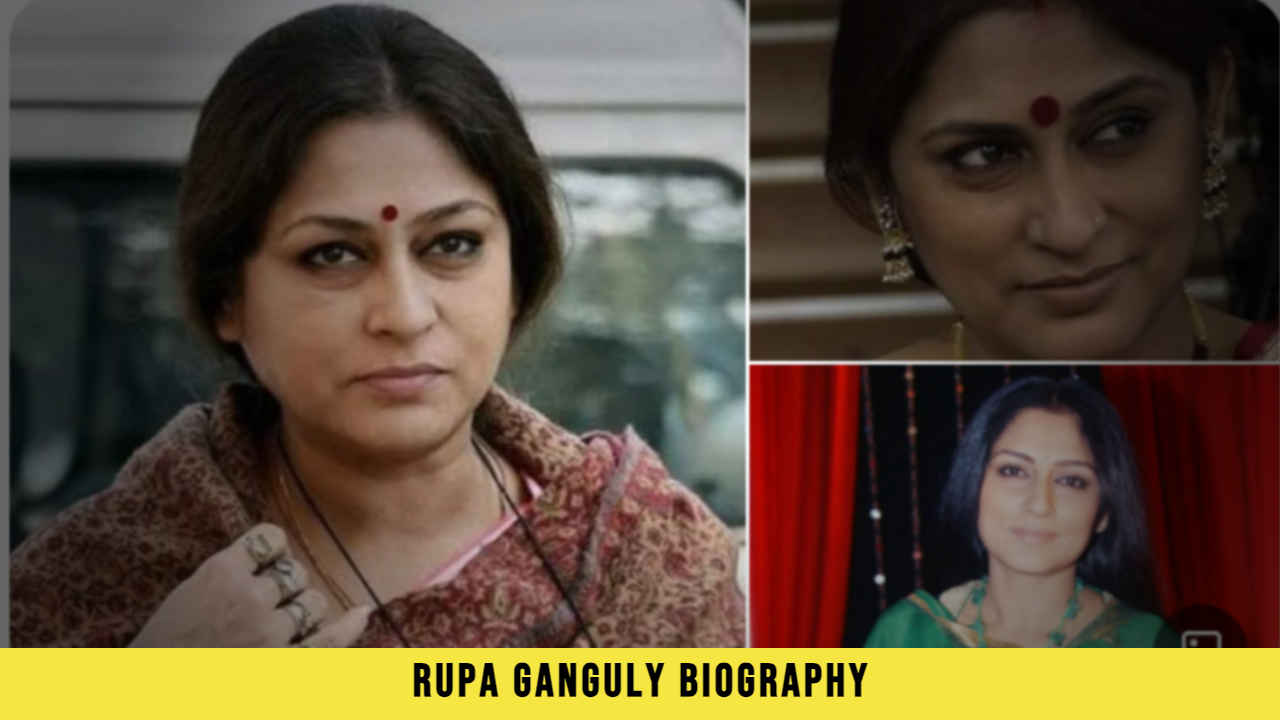
adminRupa Ganguly Biography – There’s a scene in B.R. Chopra’s Mahabharat that stopped the entire country. A queen is dragged by her hair into a royal court. She weeps, she questions, she shakes with rage — and every Indian watching at home felt that fury too. The actress behind that unforgettable portrayal was Rupa Ganguly. And if you think her life off-screen was any less dramatic, you’d be wrong.
Rupa Ganguly’s biography isn’t just about one iconic role. It’s about a woman who stumbled into acting, conquered Bengali cinema and national television, won a National Film Award for singing, survived an abusive marriage, attempted suicide three times, rebuilt herself, and walked into Parliament. Here’s her full story — told the way it deserves to be.
Quick Facts About Rupa Ganguly
| Detail | Information |
| Full Name | Roopa Ganguly |
| Date of Birth | 25 November 1966 |
| Birthplace | Kalyani, Kolkata, West Bengal |
| Zodiac Sign | Sagittarius |
| Education | B.Sc., Jogamaya Devi College, Kolkata |
| Profession | Actress, Playback Singer, Politician |
| Husband | Dhrubo Mukerjee (m. 1992, div. 2006) |
| Son | Akash Mukherjee (born 1997) |
| Political Party | Bharatiya Janata Party (BJP) |
| Parliament | Rajya Sabha (2016–2022) |
| Net Worth | Estimated ₹28 Crore |
From Kalyani to Kolkata — Her Early Life and Roots
A Middle-Class Upbringing That Shaped Her Grit
Rupa Ganguly was born on 25 November 1966 in Kalyani, a town near Kolkata in West Bengal. She grew up in a joint family — the kind where everyone eats together, arguments happen loudly, and children learn early that life isn’t always easy. Her father was Samarendra Lal Ganguly and her mother was Juthika Ganguly. The family was middle-class, and while they weren’t wealthy, they were rooted in Bengali culture and values.
She’s talked openly about facing a serious financial crunch during her college years. There were no safety nets. No family connections in the film industry. No godfather waiting to hand her a role. What she did have was resilience — and that would matter later.
Schools, College, and a Degree She Almost Never Used
Rupa completed her secondary schooling at Beltala Girls’ High School in Kolkata and her Higher Secondary from Jodhpur Park Girls’ High School. She then pursued a Bachelor of Science degree at Jogamaya Devi College, which is affiliated with the University of Calcutta. She graduated — and had absolutely no plans to become an actress.
That changed at a wedding.
How Rupa Ganguly Accidentally Became an Actress
The Wedding That Changed Everything
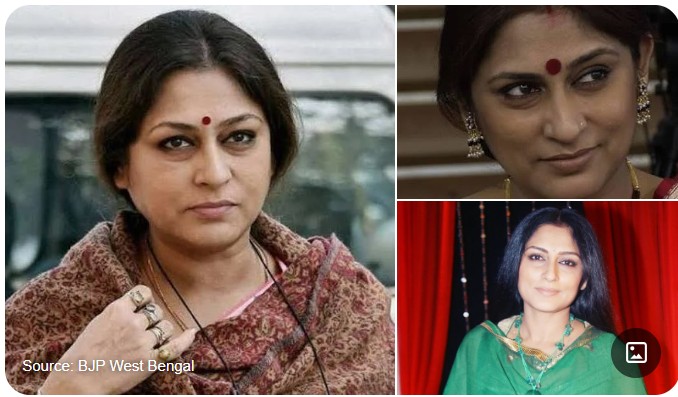
After finishing her degree, some of her relatives nudged her toward trying acting. She was hesitant — it wasn’t something she’d planned or dreamed about. But she attended a wedding ceremony where a director named Bijoy Chatterjee spotted her. He was working on a Hindi telefilm called Nirupama (1986), based on Rabindranath Tagore’s Bengali short story Dena Paona. He wanted a fresh face — someone natural, unpolished, and authentic. He thought Rupa had exactly that quality.
She almost said no. It was only after her aunts pushed her that she agreed.
Her First Role in Nirupama — A Story About Women’s Struggle
Nirupama tackled the dowry system and the exploitation of women in patriarchal households. Rupa played the titular character — a woman caught in a loveless marriage, treated as a financial transaction rather than a human being. The legendary Soumitra Chatterjee played her onscreen father.
She was so convincing in the role that Soumitra Chatterjee himself was impressed enough to cast her in his own directorial project, Stree Ki Patra (1986), also based on a Tagore story. In that telefilm, she played a woman fighting for her own identity within the confines of marriage. She later said she could relate deeply to the character’s sense of being reduced and commodified — words that felt uncomfortably personal, especially given what her own marriage would eventually put her through.
The Making of TV’s Most Iconic Draupadi
Why Juhi Chawla Said No (And What That Meant for Rupa)
Before Rupa Ganguly became Draupadi, the role was offered to Juhi Chawla. Juhi declined. B.R. Chopra, the legendary producer and director behind the Mahabharat television series, needed to find someone else. He’d reportedly been impressed by Rupa’s performance in the TV serial Gandevta and decided she should at least try for the role.
Ramya Krishnan Was Also in the Race
It wasn’t a straightforward casting decision. Ramya Krishnan — who would later become famous as Sivagami in Baahubali — was also a strong contender for the role of Draupadi. The two actresses were being evaluated. What ultimately tipped the scales in Rupa Ganguly’s favor was her Hindi diction. Her command over the language was sharper, and for a nationally broadcast epic, that mattered enormously.
The Audition, the Look Test, and Why She Got the Role
In 1988, Rupa was called to NT1 Studio by director Biresh Chatterjee. He told her Chopra wanted to see her for a look test. She appeared. She impressed. She was selected. And just like that, the role that would define her public identity for decades was hers.
The Game of Dice Scene — One of Indian Television’s Greatest Moments
Rupa first appeared in episode 34 of Mahabharat in 1989. But it was episodes 46, 47, and 48 — the famous “Game of Dice” sequence — that made the whole country stop and watch. In this sequence, Draupadi is dragged by her hair into the Kuru court by Dushasana. She’s humiliated. She questions the elders. She demands justice.
The scene required her to cry — genuinely, deeply. She got so absorbed in it that she continued weeping even after the camera stopped rolling. She later admitted, almost self-critically, that she felt her overall performance in the series was mediocre. But audiences and critics saw something entirely different: they saw a woman who had made Draupadi human, not just mythological.
The role earned her the Smita Patil Memorial Award and made her one of the highest-paid television actresses in India during the 1980s.
Her Film Career — Much More Than Just Draupadi
Working with India’s Most Respected Directors
What separates Rupa Ganguly from many TV stars of her era is the caliber of filmmakers she attracted. She’s not someone who simply coasted on her television fame. She worked with directors who were making serious, socially relevant cinema.
Directors she collaborated with include:
- Mrinal Sen — one of India’s most celebrated parallel cinema pioneers
- Aparna Sen — a filmmaker known for nuanced, woman-centric storytelling
- Goutam Ghose — National Award-winning Bengali filmmaker
- Rituparno Ghosh — one of the most acclaimed directors in Bengali cinema’s modern era
She was often compared to Shabana Azmi in terms of her intensity and range — described as “Tollywood’s answer to Bollywood’s Shabana Azmi.” That’s not a comparison you earn with one lucky role.
Padma Nadir Majhi, Yugant, and the Art Cinema Years
In the 1990s, Rupa delivered some of her most critically acclaimed work. Padma Nadir Majhi (1993), directed by Goutam Ghose and based on Manik Bandyopadhyay’s novel, was a deeply layered river drama that earned national attention. Yugant (1995) by Aparna Sen was another thoughtful, award-winning film she was part of. She also appeared in Abar Aranye (2003) by Ghose, and Antarmahal (2006) by the late Rituparno Ghosh — all films that pushed the boundaries of mainstream Bengali cinema.
The Film She Produced Herself — Ek Mutho Chabi (2005)
Here’s a detail most biography pages skip entirely: Rupa Ganguly produced her own film. Ek Mutho Chabi (2005) was a Bengali film that she not only acted in but also produced — a significant creative and financial risk. In the film, she played an established actress who loses her career after a car accident. The film earned her an Anandalok Award nomination for Best Actress.
Her Cross-Language Versatility — Bengali, Hindi, Kannada, and Beyond
Her Cross-Language Versatility — Bengali, Hindi, Kannada, and Beyond
Rupa Ganguly acted in films across Bengali, Hindi, Kannada, and even English. Her English-language film Bow Barracks Forever (2004), directed by Anjan Dutta, gave her a completely different kind of creative space. She also starred in South Indian productions — she appeared opposite Kannada superstar Dr. Vishnuvardhan in Inspector Dhanush (Hindi) and Police Mathu Daada (Kannada). That’s a range of languages and industries very few Bengali actresses of her generation can claim.
Rupa Ganguly the Singer — The National Award No One Talks About
Her Training as a Rabindra Sangeet Vocalist
Most people know Rupa Ganguly as an actress. Very few know she’s a trained Rabindra Sangeet vocalist — Rabindra Sangeet being the formal genre of songs composed by Nobel laureate Rabindranath Tagore. She’s also a trained classical dancer. These aren’t hobbies she picked up for fun — they’re disciplines that require years of dedicated practice.
The Bengali Film Abosheshey and Her Award-Winning Voice
In 2011, Rupa Ganguly won the National Film Award for Best Female Playback Singer for her work in the Bengali film Abosheshey, directed by Aditi Roy. The National Film Award is India’s most prestigious recognition in cinema — the equivalent of a national honor. Most articles about her mention this award in a single line, almost as a footnote. But let’s be clear about what it means: out of every female playback singer in the entire country that year, the Government of India’s jury said her voice was the finest. That’s extraordinary.
Marriage, Heartbreak, and Three Suicide Attempts — Her Personal Life Explained
The Marriage to Dhrubo Mukerjee in 1992
In 1992, Rupa Ganguly married Dhrubo Mukerjee, a mechanical engineer from Kolkata. By all appearances, it should have been a stable, good match. It wasn’t.
A Husband Who Couldn’t Handle Her Fame
What followed was, by her own account, years of emotional and financial abuse. Dhrubo grew increasingly resentful of her success and fame. He reportedly denied her basic daily expenses — money for necessities. He tried, in various ways, to undermine her career. For a woman who had been one of the highest-paid TV actresses in the country, being denied money for household basics was both humiliating and suffocating.
Son Akash Mukherjee and Life as a Mother
Son Akash Mukherjee and Life as a Mother
Rupa and Dhrubo have a son together — Akash Mukherjee, born in 1997. Despite everything that happened between her and her husband, she speaks about her son with love. Motherhood became one of the anchors in her life during the most difficult years.
The Divorce in 2006 — A New Beginning
The marriage ended in divorce in 2006. She didn’t frame it as defeat. She framed it as survival. After the divorce, she didn’t disappear — she rebuilt. She shifted her base to Mumbai in 2007 and began working in Hindi television serials again, including Karam Apna Apna, Love Story, Kasturi, and Agle Janam Mohe Bitiya Hi Kijo.
Her Live-in Relationship with Singer Dibyendu
After her divorce, Rupa was in a live-in relationship with Dibyendu, a Bengali playback singer who was 13 years younger than her. They shared her Mumbai flat for a period before the relationship eventually ended. She’s spoken about this chapter of her life with a maturity and lack of bitterness that’s honestly refreshing.
Rupa Ganguly in Politics — From Screen to Parliament
Joining the BJP in 2015
In 2015, Rupa Ganguly made a decision that surprised many: she joined the Bharatiya Janata Party (BJP) ahead of the 2016 West Bengal Legislative Assembly elections. She also stepped down from her position at the West Bengal Motion Picture Artistes’ Forum, where she had served as both General Secretary and Vice-President — believing that a political figure shouldn’t hold a significant post in an artiste body simultaneously. That kind of principled boundary-setting isn’t common in Indian politics.
She was made President of BJP Mahila Morcha, West Bengal — the women’s wing of the party in the state.
The 2016 Assembly Election Loss She Bounced Back From
In 2016, she contested from Howrah North as a BJP candidate. She lost to Laxmi Ratan Shukla, the former cricketer and Trinamool Congress candidate. Losing a high-profile first election would discourage most people. She kept going.
Nominated to Rajya Sabha — Replacing Navjot Singh Sidhu
In October 2016, she was nominated to the Rajya Sabha by the President of India — filling the seat vacated by cricketer Navjot Singh Sidhu, who had resigned from the party. Her nomination was an acknowledgment of her national standing, her cultural significance, and her commitment to public life.
The 2026 Victory from Sonarpur Dakshin
The 2026 Victory from Sonarpur Dakshin
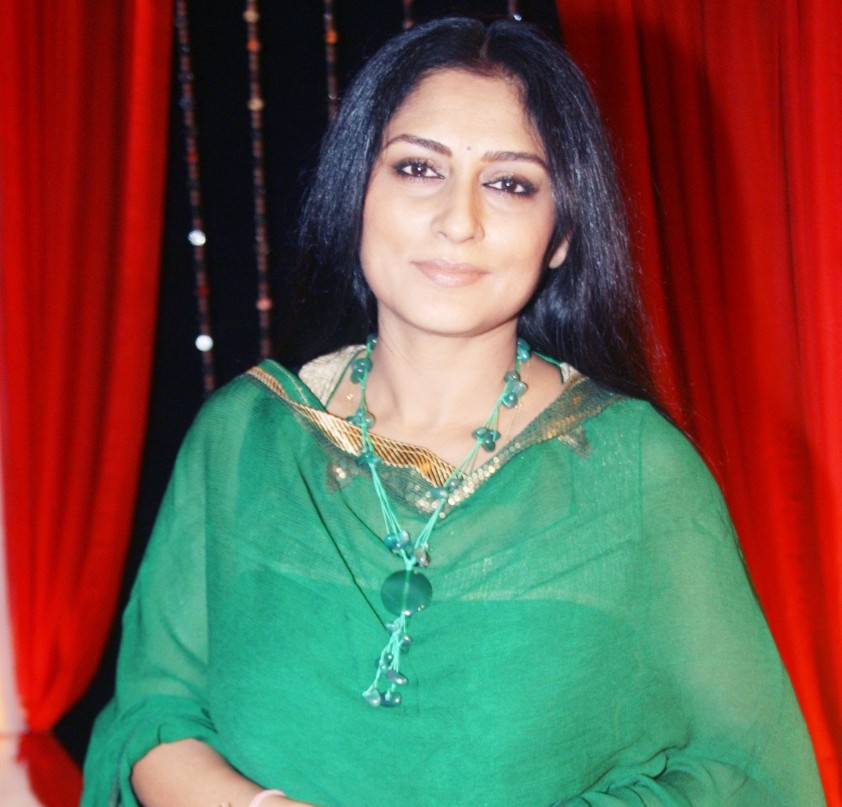
In the 2026 West Bengal Legislative Assembly elections, Rupa Ganguly contested as a BJP candidate from Sonarpur Dakshin — and won. Convincingly. She secured victory by a margin of approximately 35,000 votes. It was a full-circle moment for someone who had lost her first political contest a decade earlier.
Controversies That Followed Her
The Child Trafficking Case Allegations
Her Remarks About Women’s Safety in Bengal
Sach Ka Saamna — The Confessions That Shocked India
While attacking the Mamata Banerjee-led Trinamool Congress government’s handling of law and order, she made a remark about women’s safety that sparked outrage across political lines. An FIR was filed against her. She stood by her political position while acknowledging that the phrasing had crossed a line for many.
The 2024 Arrest and Bail
In 2009, Rupa Ganguly appeared on STAR Plus’s reality show Sacch Ka Saamna — the Indian adaptation of The Moment of Truth. On that show, she revealed things about her personal life that no public figure had dared admit on national television: extramarital affairs during her marriage, casting couch encounters in Bollywood, and deeply painful personal lows. The episode became one of the most talked-about moments in Indian reality TV history. Whether you admire her for her honesty or criticize her for the revelations, it took nerve to sit in that chair and answer those questions.
The 2024 Arrest and Bail
Awards and Recognition Throughout Her Career
Awards and Recognition Throughout Her Career
Rupa Ganguly’s shelf of recognition spans acting, singing, and public service:
- Smita Patil Memorial Award — Best Actress in a TV series, for Mahabharat (1989)
- Kalakar Award for Best Actress — for the TV show Mukta Bandha (1993)
- Bengal Film Journalists’ Association (BFJA) Award, Best Supporting Actress — for Ujan (1996)
- Bengal Film Journalists’ Association (BFJA) Award, Best Supporting Actress — for Antarmahal (2006)
- National Film Award for Best Female Playback Singer — for Abosheshey (2011)
- Kalakar Award — won three times over the course of her career
Rupa Ganguly vs Rupali Ganguly — Clearing Up the Confusion
This confuses a lot of people, so let’s set it straight once and for all.
Rupa Ganguly (born 1966) is the actress and politician we’ve been discussing — best known for Draupadi in BR Chopra’s Mahabharat and her BJP political career.
Rupali Ganguly (born 1977) is an entirely different actress — the daughter of filmmaker Anil Ganguly, best known for playing Monisha Sarabhai in Sarabhai vs Sarabhai and the lead in Anupamaa (2020–present). She also joined the BJP, but in 2024.
There’s also a third person who adds to the confusion: Ashok Kumar’s daughter, who is also named Rupa Ganguly (married to actor Deven Verma). All three women share similar names and have occasionally had their filmographies and details mixed up across the internet. So if you’ve been puzzled — you’re definitely not alone.
Net Worth and Earnings
Frequently Asked Questions About Rupa Ganguly
Who is Rupa Ganguly and why is she famous? Rupa Ganguly is an Indian actress, playback singer, and politician from West Bengal. She’s most famous for portraying Draupadi in B.R. Chopra’s iconic TV series Mahabharat (1988–1989), which made her a household name across India. She’s also a National Award-winning singer and a former Member of Parliament in the Rajya Sabha.
Did Rupa Ganguly really play Draupadi in Mahabharat? Yes. She was cast after Juhi Chawla declined the role. Rupa was chosen over other candidates — including Ramya Krishnan — because of her superior Hindi diction and her screen presence. Her portrayal of Draupadi in the Game of Dice sequence is considered one of Indian television’s greatest acting moments.
Why did Rupa Ganguly divorce her husband? Rupa married mechanical engineer Dhrubo Mukerjee in 1992. According to her own public statements, her husband grew increasingly resentful of her fame and success, denied her money for daily expenses, and tried to derail her career. She attempted suicide three times during the marriage. They divorced in 2006.
What is Rupa Ganguly’s National Award for? She won the National Film Award for Best Female Playback Singer in 2011 for the Bengali film Abosheshey, directed by Aditi Roy. It’s the most prestigious government-conferred film honor in India.
Is Rupa Ganguly a politician today? Yes. She joined the BJP in 2015. She served as a Member of Parliament in the Rajya Sabha from 2016 to 2022. She also won the 2026 West Bengal Legislative Assembly election from Sonarpur Dakshin by a margin of around 35,000 votes.
What is Rupa Ganguly’s net worth? Her estimated net worth is approximately ₹28 crore, earned through television, films, brand endorsements, and her political career.
What’s the difference between Rupa Ganguly and Rupali Ganguly? They’re two completely different people. Rupa Ganguly (born 1966) is the Draupadi actress and BJP politician. Rupali Ganguly (born 1977) is the actress known for Sarabhai vs Sarabhai and Anupamaa. Their names are similar and their careers have occasionally been confused — but they share no family connection.
What happened to Rupa Ganguly after Mahabharat ended? After Mahabharat, she built a strong Bengali film career working with directors like Mrinal Sen, Aparna Sen, Goutam Ghose, and Rituparno Ghosh. She won multiple awards, produced her own film, won a National Award for singing, and eventually transitioned into politics with the BJP. She’s remained one of West Bengal’s most prominent public figures.
What happened to Rupa Ganguly after Mahabharat ended? After Mahabharat, she built a strong Bengali film career working with directors like Mrinal Sen, Aparna Sen, Goutam Ghose, and Rituparno Ghosh. She won multiple awards, produced her own film, won a National Award for singing, and eventually transitioned into politics with the BJP. She’s remained one of West Bengal’s most prominent public figures.

 BioPadi Editor
 admin
admin